The sane ones, I mean.
FIND THE OTHERS

LYDIA CORNELL: AFI Best Actress Nominee, People's Choice Award winner; Actor, Writer, Director, Producer; woman and children advocate; teen mentor, comedienne, talk show host, inspirational pubic speaker best known for her starring role on ABC's "Too Close for Comfort" as TV legend Ted Knight's daughter 'Sara'; HBO's Curb Your Enthusiasm, and over 250 shows, episodes and movies worldwide. Turns tragedy into comedy, life-saving issues for women and equal pay for equal work...
Thursday, July 18, 2013


Monday, July 08, 2013
SOUNDS OF LIFE BEYOND OUR GALAXY?

News release: 2013-216 July 8, 2013
Radio Bursts Discovered From Beyond our Galaxy  The full version of this story with accompanying images is at: http://www.jpl.nasa.gov/news/news.php?release=2013-216&cid=release_2013-216 Astronomers, including a team member from NASA's Jet Propulsion Laboratory in Pasadena, Calif., have detected the first population of radio bursts known to originate from galaxies beyond our own Milky Way. The sources of the light bursts are unknown, but cataclysmic events, such as merging or exploding stars, are likely the triggers. A radio burst is a quick surge of light from a point on the sky, made up of longer wavelengths in the radio portion of the light spectrum. A single radio burst was detected about six years ago, but researchers were unclear about whether it came from within or beyond our galaxy. The new radio-burst detections -- four in total -- are from billions of light-years away, erasing any doubt that the phenomenon is real. The discovery, described in the July 4 issue of the journal Science, comes from an international team that used the Parkes Observatory in Australia. "Short radio bursts are really tricky to identify," explained Sarah Burke Spolaor of JPL. "Our team had to search 11 months of data covering a large sky area to find them." Spolaor developed the software used to seek single pulses in the radio data and pick out genuine signals from local interference sources -- such as cell phones, spark plugs and aircraft. This amounted to an enormous and complex computational task. Dan Thornton, lead author of the new study from England's University of Manchester and Australia's Commonwealth Scientific and Industrial Research Organization, said, "The radio bursts last for just a few milliseconds and the farthest one that we detected was 11 billion light-years away." The findings open the door to studying an entirely new class of eruptive cosmic events and can also help with cosmology mysteries, for example, about the nature of matter in the universe. Our sky is full of flares and bursts of varying natures. For instance, gamma-ray bursts are thought to occur when stars collapse into black holes. They are routinely detected by a network of telescopes on the ground and in space, including NASA's Swift and Fermi. When one telescope in the network detects a burst, it can notify others to quickly slew to the target for coordinated observations. The newfound radio bursts, while likely of a different origin than gamma-ray bursts, also consist of light waves generated by powerful events happening at great distances. Researchers would like to develop systems similar to the gamma-ray burst networks of telescopes to follow up quickly on radio bursts, but this is more challenging because radio waves are slowed by gas in space. Time is needed to process the radio observations and tease out the short-lived bursts. On the other hand, the fact that radio waves are impeded as they travel through space to reach us offers benefits. By studying how the radio waves have been slowed, scientists can better understand baryonic matter, the material that gets in the way. Baryonic matter is what makes up people and planets and everything you see. The rest of the universe consists of mysterious substances called dark matter and dark energy. Exactly what is triggering the release of the radio waves is unknown. Theories include colliding neutron stars or black holes; evaporating black holes; and stellar explosions called supernovae. The new data do not fit nicely with any of these scenarios, leaving the scientists perplexed. Further scans for radio bursts using the Parkes Observatory are ongoing. Researchers are also using other telescopes to search for and characterize these events. For instance, the V-Fastr project, developed in part at JPL, is currently running on the National Radio Astronomy Observatory's Very Long Baseline Array, an international network of telescopes. It will enable scientists to localize a burst's origin to a precise location in a distant host galaxy. Other institutions participating in this study are: Max-Planck Institute for Radio Astronomy, Germany; the INAF-Cagliari Astronomical Observatory and the Cagliari Observatory and University, Italy; Swinburne University of Technology, the Commonwealth Scientific and Industrial Research Organization, the Australian Research Council Centre of Excellence for All-Sky Astrophysics and Curtin University, all in Australia; and West Virginia University, Morgantown. JPL is managed by the California Institute of Technology, Pasadena, for NASA. Whitney Clavin 818-354-4673 Jet Propulsion Laboratory, Pasadena, Calif. whitney.clavin@jpl.nasa.gov
- end -
|
Remove yourself from this mailing.
Remove yourself from all mailings from NASA Jet Propulsion Laboratory.

Monday, July 01, 2013
OKAY, SO I DENTED MY SON'S FENDER ON HIS BRAND NEW CAR
TEENAGERS ARE NOT NICE PEOPLE... but that doesn't justify lying, does it?
Okay, so I dented my son's back fender on his brand new car. I was scared to tell him, so I called my bff James Hillis Ford, and whispered the news into the phone, and decided not to tell my son right away.
My plan was to sleep on it, and maybe even pretend that it happened another way — possibly at his own work parking lot — just maybe I could get away with it. Now I am someone who prides myself on being honest to a fault. (Pride always goes before the fall.) But for some reason I just couldn't face my teenager's wrath. In case you haven't noticed, teenagers are not nice people. I had been trying to park it for him in the impossibly small spot given to us by a Good Samaritan -- because you can't park your own car in front of your own house at night in this town. Not a single car is allowed to be on the streets in our small prestigious Westside city; they love to give $100 parking tickets.
So anyway, I was doing a "no good deed goes unpunished" deed by parking it for him, since I pride myself on being an expert parker (pride always goes before the fall, or did I say this already?) and this way, he gets to stay home for the summer and go to work at his new job at Scopely everyday, and so every night I park it for him. This particular evening I misjudged the space size and angled it too close to a pole...
You won't believe what happened next. To be continued...
Check out my new PUSHPAGE
http://www.pushpage.me/LydiaCornell
MONSTERS UNIVERSITY
http://monstersuniversity.com/edu/
On Saturday, June 29, 2013, I went to the private FoCA (Friends of CalArts) screening of MONSTERS UNIVERSITY on the Disney Studios lot
 :
:
Okay, so I dented my son's back fender on his brand new car. I was scared to tell him, so I called my bff James Hillis Ford, and whispered the news into the phone, and decided not to tell my son right away.
My plan was to sleep on it, and maybe even pretend that it happened another way — possibly at his own work parking lot — just maybe I could get away with it. Now I am someone who prides myself on being honest to a fault. (Pride always goes before the fall.) But for some reason I just couldn't face my teenager's wrath. In case you haven't noticed, teenagers are not nice people. I had been trying to park it for him in the impossibly small spot given to us by a Good Samaritan -- because you can't park your own car in front of your own house at night in this town. Not a single car is allowed to be on the streets in our small prestigious Westside city; they love to give $100 parking tickets.
So anyway, I was doing a "no good deed goes unpunished" deed by parking it for him, since I pride myself on being an expert parker (pride always goes before the fall, or did I say this already?) and this way, he gets to stay home for the summer and go to work at his new job at Scopely everyday, and so every night I park it for him. This particular evening I misjudged the space size and angled it too close to a pole...
You won't believe what happened next. To be continued...
Check out my new PUSHPAGE
http://www.pushpage.me/LydiaCornell
MONSTERS UNIVERSITY
http://monstersuniversity.com/edu/
On Saturday, June 29, 2013, I went to the private FoCA (Friends of CalArts) screening of MONSTERS UNIVERSITY on the Disney Studios lot
 |
| At the Monsters U red carpet Saturday, June 29, 2013 |
 |
| In front of the Seven Dwarves at Walt Disney Studios |

By the way: great people work at Scopely, the new innovative mobile gaming company.
My son works there too :) But don't let him know I said that.
Thursday, June 27, 2013
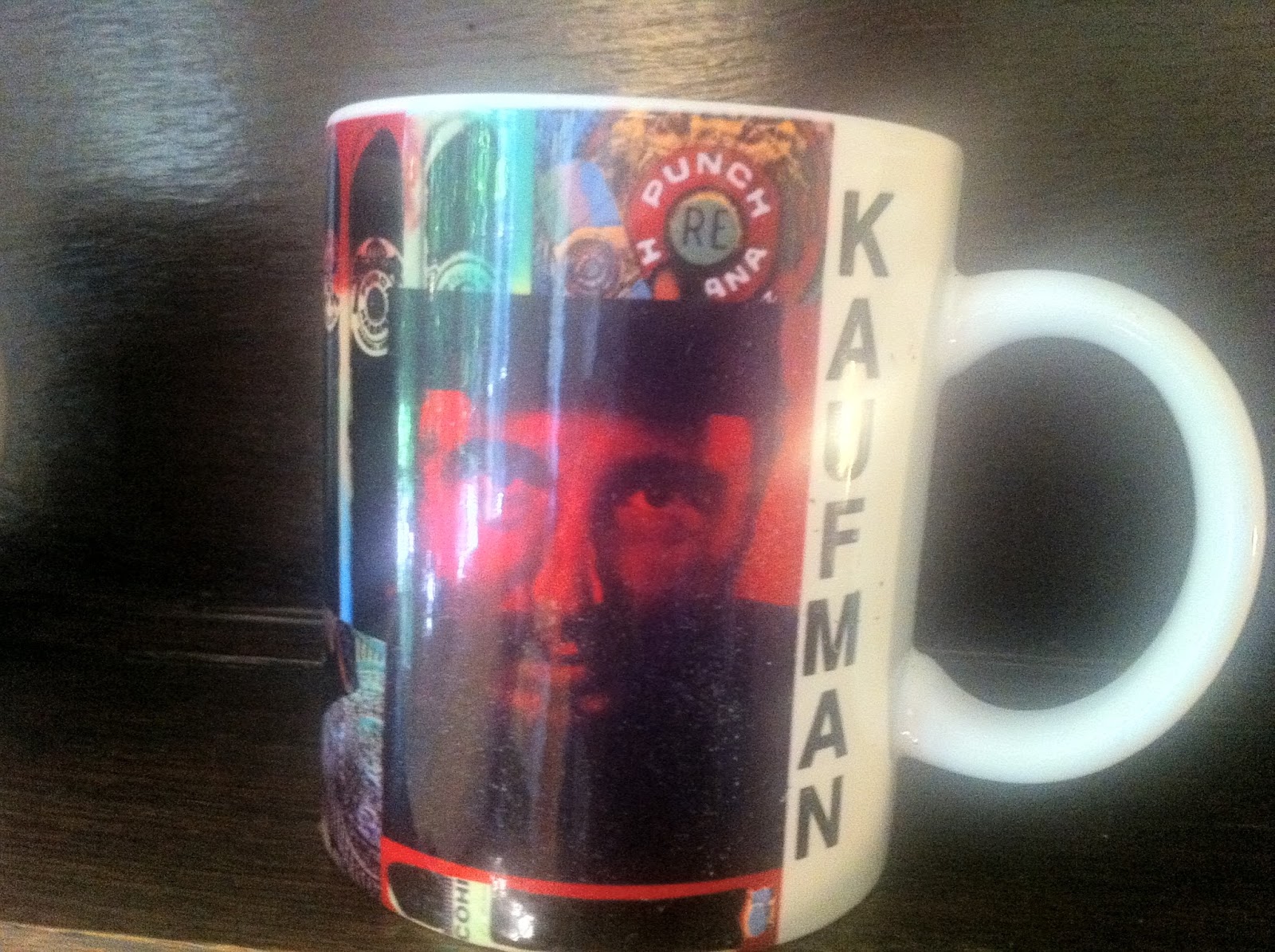
TRUE BEAUTY: Memories of the Artist Steve Kaufman, Warhol's Legendary Protege
"
looked like Jackie Gleason as a girl you'd have problems too." ~ Lydia Cornell


   |
| Muy BFF James Hillis Ford — the funniest, deepest, silliest, most thoughtful person. A true empath. |
 |
| I love Audrey Hepburn |

Check out paintings I'm selling to raise funds and to help Children, disaster and tornado victims for Operation USA and Red Cross. Please bid! I also have an extremely rare and stunning Frank Sinatra, Charlie Chaplin, Beethoven, Marilyn Monroe, Ben Franklin, and more..
 |
| Lydia Cornell, Steve Kaufman at Sports Spectacular in Los Angeles. I was married to PCH at the time. |




Subscribe to:
Posts (Atom)